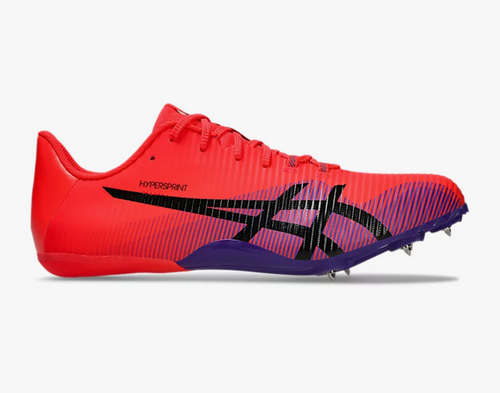
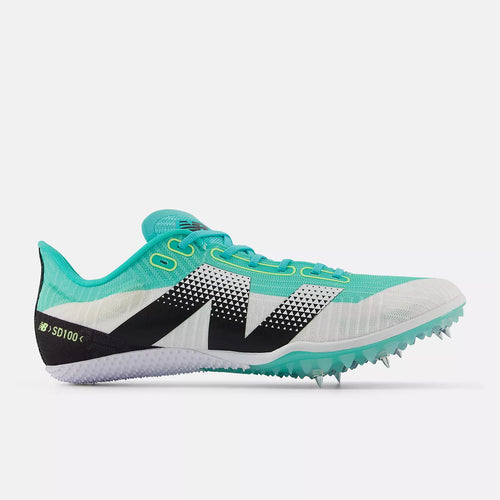
What makes a sprint spike different
A sprint spike has a rigid plate running most of the shoe's length, 6 to 8 pin receptacles under the forefoot and little or no heel cushion. That stiffness returns energy at toe-off and keeps you from sinking into your heel. The trade-off is comfort: sprint spikes feel harsh at anything longer than 400m.
100m/200m vs. 400m
Short sprinters can go with the stiffest, most aggressive plate they're comfortable in. 400m runners often prefer a slightly more forgiving sprint spike, or a mid-distance spike, because the last 100m is where form breaks down.
Hurdlers: go mid-distance
Sprint spikes have almost no heel, and hurdlers land on their heels every time they come off a barrier. That's why we fit hurdlers in mid-distance spikes: you keep a firm, fast plate up front and get a cushioned heel for the landings.
Fit and pins
Wear sprint spikes snug, almost like a racing glove, with minimal space at the toe. Most outdoor tracks allow 1/4" pyramid pins. Indoor meets often require 1/8" or 3/16".
Want to try a few on? Stop into our Walpole, Needham or Falmouth store and we'll fit you for your event.
FAQ
Can I use sprint spikes for the 800m?
You can, but most 800m runners prefer a mid-distance spike with a little more forefoot comfort.
What spikes do hurdlers wear?
Mid-distance spikes. Hurdlers need a heel to land on coming off each barrier, and sprint spikes don't have one. Shop mid-distance spikes.
Are carbon-plated sprint spikes worth it?
For experienced sprinters with good mechanics, yes. Beginners usually go just as fast in a $75 to $90 spike while they build strength.
Shop by event: All Track Spikes · Sprint · Mid-Distance · Distance · Jumps · Throws · Cross Country · Men's · Women's